Why Do Humpback Whales Sometimes Roll Sideways at the Water’s Surface?
Watching a humpback whale rise through the water is already an unforgettable experience. Sometimes, however, the whale does something less predictable: it rotates its body to one side, exposing a pectoral fin, part of its belly, or a different section of its back before returning to a more upright position.
For visitors on a whale-watching trip in Samaná Bay, Dominican Republic, this movement can raise an interesting question: Why do humpback whales sometimes roll sideways at the surface?
The answer is not always straightforward. A sideways roll may be connected to movement, interaction, surface activity, or another behavior, but its meaning depends on what happens before and after the rotation. One brief observation is rarely enough to identify the whale’s exact intention.
Understanding this distinction can make a whale-watching experience more rewarding. Instead of assigning a definite meaning to every movement, visitors can learn to notice the whale’s posture, the parts of its body that become visible, and the sequence of actions surrounding the roll.
What Does a Sideways Roll Look Like?
A sideways roll occurs when a whale rotates part of its body around its lengthwise axis. Rather than remaining belly-down with its back facing upward, the animal turns enough for a different side of its body to face the surface.
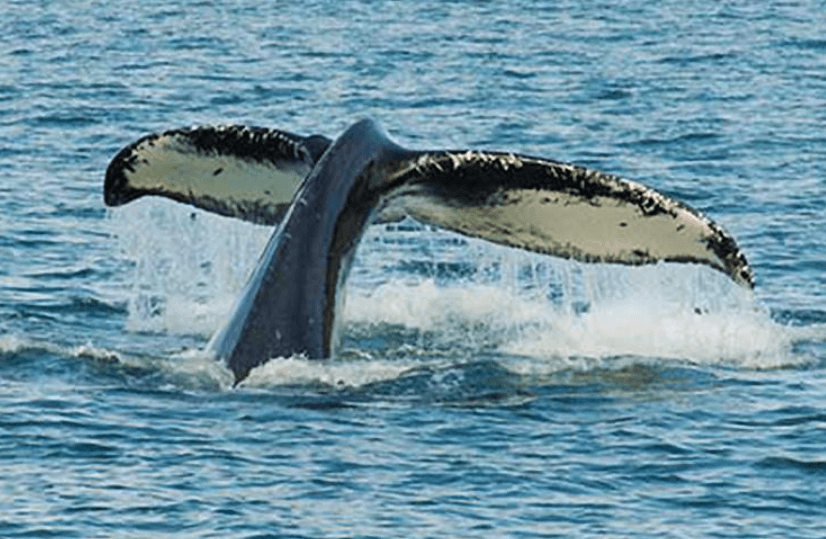
Depending on the degree of rotation, observers might see one pectoral fin rise above the water, notice a pale section of the underside, or watch the whale tilt before settling back into a familiar swimming position.
Not every turn qualifies as a distinct rolling behavior. A whale may simply bank while changing direction, adjust its body angle, or turn as it moves beneath the surface. The difference can be difficult to judge from a moving boat, especially when waves obscure part of the animal.
For this reason, it is useful to describe exactly what was observed rather than immediately giving the movement a behavioral label.
Why Might a Humpback Whale Roll Sideways?
There is no single explanation that applies to every sideways roll. Several possibilities may be relevant, depending on the whale’s circumstances and the surrounding behavior.
1. Adjusting Its Body While Swimming
A humpback whale may rotate its body as part of a turn or change in swimming direction. Like other large marine animals, it must coordinate its body position and fins to move through the water.
From a boat, a normal maneuver can look dramatic when a large pectoral fin briefly appears above the surface. The visible portion of the movement may represent only a small part of a longer underwater turn.
If the whale continues swimming in a new direction after the rotation, a maneuver is one possible explanation. Nevertheless, the observation alone does not prove why the whale changed course.
2. Bringing a Pectoral Fin Above the Water
Humpback whales have exceptionally long pectoral fins. Their position and movement can become especially noticeable when a whale tilts or rolls.
A fin that was previously hidden underwater may suddenly appear along the side of the body. Sometimes, a whale exposes much of the fin; in other cases, only its tip or edge is visible.
Seeing a fin above the surface does not automatically mean the whale is waving, signaling, or trying to communicate with nearby boats. Such interpretations require more evidence than the fin’s position alone provides.
3. Taking Part in Surface Activity
Humpback whales display a range of surface behaviors, including breaching, flipper slapping, and other movements that bring parts of the body into contact with the air or water.
A sideways rotation may occur near other surface movements, but it should not automatically be classified as a separate display or assigned the same meaning as a breach or a flipper slap.
The surrounding sequence matters. Did the whale roll once and continue swimming Did it repeat the movement Was another whale nearby Were other recognizable behaviors visible These details help describe the event more accurately without assuming a cause.
4. Moving During an Interaction With Another Whale
Humpback whales may be observed near other whales during their breeding-season presence in the waters around Samaná. When multiple animals are nearby, their movements can become more complicated to interpret.
A whale might turn or roll while changing its position relative to another individual. However, proximity alone does not demonstrate that the animals are interacting socially, competing, courting, or engaging in another specific behavior.
A careful observer records the positions and movements of the animals and looks for a repeated sequence before drawing conclusions.
5. Responding to Conditions Underwater
A whale’s movement takes place in three dimensions, even when observers can see only the surface. The animal may be changing depth, navigating around another animal, or adjusting its course beneath the boat’s field of view.
Water movement, visibility, and viewing angle can also influence how the action appears to people watching from above.
These factors can help explain why a roll seems sudden or unexpected, but they do not establish that the whale is reacting to a particular underwater condition. Without additional evidence, the safest interpretation is simply that the animal rotated its body while moving.
Does Rolling Sideways Mean a Whale Is Playing?
Not necessarily.
People naturally connect unusual animal movements with familiar human activities. A whale that rolls, twists, or exposes its belly may appear playful, particularly when the movement is repeated.
Play is a possible interpretation of some animal behavior, but a single sideways roll does not establish that a whale is playing. The same visible action may occur in different contexts, and the whale’s intention cannot be determined from appearance alone.
A more reliable approach is to describe the movement first. For example, an observer might record that the whale rolled onto one side, exposed its pectoral fin, and then continued swimming. This description preserves what was seen without adding an unsupported explanation.
Is a Sideways Roll the Same as a Flipper Slap?
No. The two actions can involve the pectoral fin, but they are not identical.
A sideways roll describes rotation of the whale’s body. During the movement, the animal may expose its fin or another part of its underside.
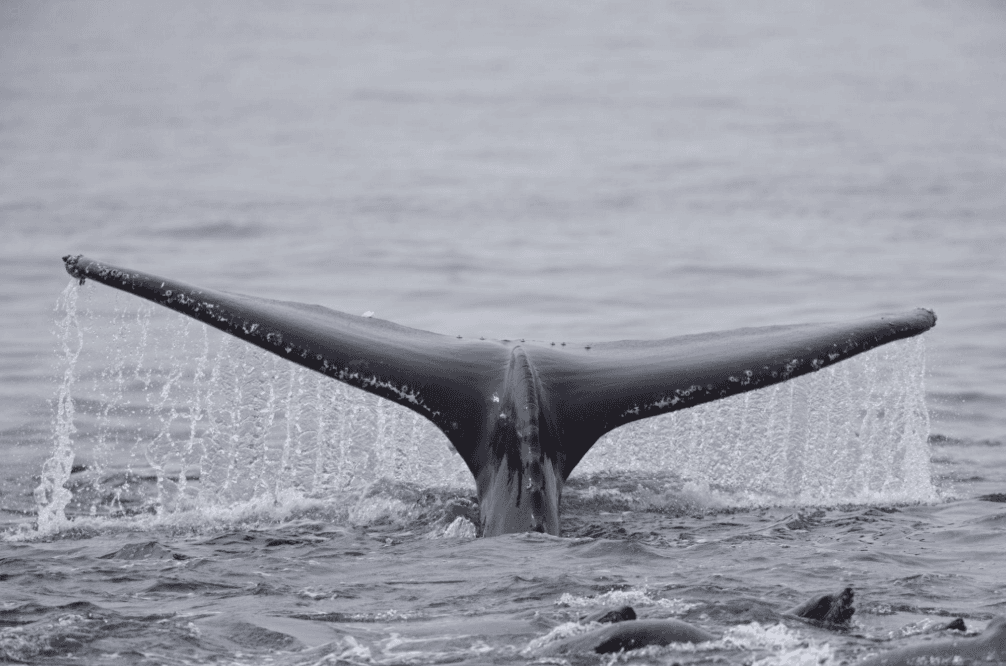
A flipper slap generally involves the pectoral fin being brought forcefully against the surface of the water. The action can produce a noticeable splash.
A whale may rotate and expose a fin without striking the water. Conversely, a fin slap may occur without a full body roll. Watching the entire sequence helps distinguish the behaviors.
This difference matters for photographers and wildlife enthusiasts who want to describe their observations accurately.
Can You See a Sideways Roll During Whale Watching in Samaná Bay?
It is possible to observe a range of humpback whale movements during the breeding season in the Samaná region, but no particular behavior is guaranteed on an excursion.
Some trips may feature whales surfacing calmly, while others may offer views of pectoral fins, breaches, tail movements, or changes in swimming direction. Sightings depend on the animals’ behavior and location, as well as sea conditions and viewing opportunities.
Even when a whale is visible, a sideways roll may happen quickly or partly underwater. The boat’s position, waves, distance, and light can determine whether observers see the whole movement or only a brief glimpse.
Travelers should therefore treat unusual behavior as a fortunate observation rather than an expected part of every tour.
How to Observe a Sideways Roll Responsibly
If a humpback whale rolls sideways near your boat, there are several ways to make the observation more useful and enjoyable.
Watch what happens before and after the roll
Rather than focusing only on the moment the fin appears, watch the whale’s movement as a sequence. Notice whether it was swimming straight, turning, approaching another whale, or already showing other surface behaviors.
Look for repeated movements
A single rotation provides limited information. If the whale repeats the movement, compare the actions carefully. Repetition can help describe a behavioral pattern, although it does not by itself reveal the animal’s intention.
Notice which body parts become visible
The pectoral fin, underside, back, and head may appear at different points during a rotation. Recording these details can help distinguish a roll from a simple turn or a fin slap.
Avoid interpreting the behavior too quickly
Descriptions such as “rolled onto its side” or “exposed its pectoral fin” are more defensible than claims that the whale was definitely playing, communicating, or reacting to the boat.
Follow the guide’s instructions
Remain seated or positioned safely as directed, and keep your attention on the guide’s safety instructions as well as the animal. Responsible whale watching means allowing whales space to move naturally and avoiding pressure to approach simply to obtain a better photograph.
Tips for Photographing a Sideways-Rolling Humpback Whale
A sideways roll can create an interesting photographic opportunity because the whale may briefly reveal markings or body features that are not visible during an ordinary surface appearance.
Use a fast shutter speed when conditions allow. Water movement and a turning whale can make sharp images difficult. A faster shutter speed may help freeze the action.
Keep the wider scene in mind. A photograph that includes the surrounding water can help communicate the whale’s position and movement. A tight crop may hide important context.
Take a short sequence of images. If photography conditions permit, a burst of images may capture different stages of the rotation. Avoid allowing the camera to distract you from safe observation.
Do not assume every exposed fin is a deliberate display. Photographs show body position, not necessarily motivation. Captions should describe the visible action rather than assign an unconfirmed purpose.
Respect wildlife-viewing rules. Do not ask a boat operator to pursue, crowd, or repeatedly reposition around a whale just to reproduce the behavior.
What Can Researchers Learn From Rolling Behavior?
Marine researchers study whale behavior by documenting observable actions and their context. A useful record might include the date, general location, sea conditions, number of whales present, the sequence of movements, and whether the behavior was repeated.
Researchers may compare observations from multiple encounters to identify patterns. Video can be especially useful when a movement is brief or when several animals are present, because it allows the sequence to be reviewed later.
However, a single observation cannot reliably establish the function of a sideways roll. Stronger interpretations require repeated observations, clear behavioral definitions, and evidence that distinguishes competing explanations.
For visitors, this is an important lesson: careful observation is valuable even when the reason behind a behavior remains unknown.
Frequently Asked Questions
Why does a humpback whale roll onto its side?
A whale may rotate while turning, adjusting its swimming position, exposing a pectoral fin, or moving during surface activity. The precise reason depends on the context and cannot usually be identified from one brief sighting.
Does a sideways roll mean a humpback whale is happy?
No. The movement alone does not reveal an emotional state. It is better to describe the visible action without assuming how the whale feels.
Why can a whale’s white pectoral fin suddenly appear?
The fin may become visible when the whale tilts or rotates its body. Its appearance can be striking from a boat, but it does not automatically indicate a deliberate signal.
Is rolling sideways the same as

Local explorer & expert guide in Montana Redonda.