Why Do Humpback Whales Sometimes Surface at a Steep Angle?
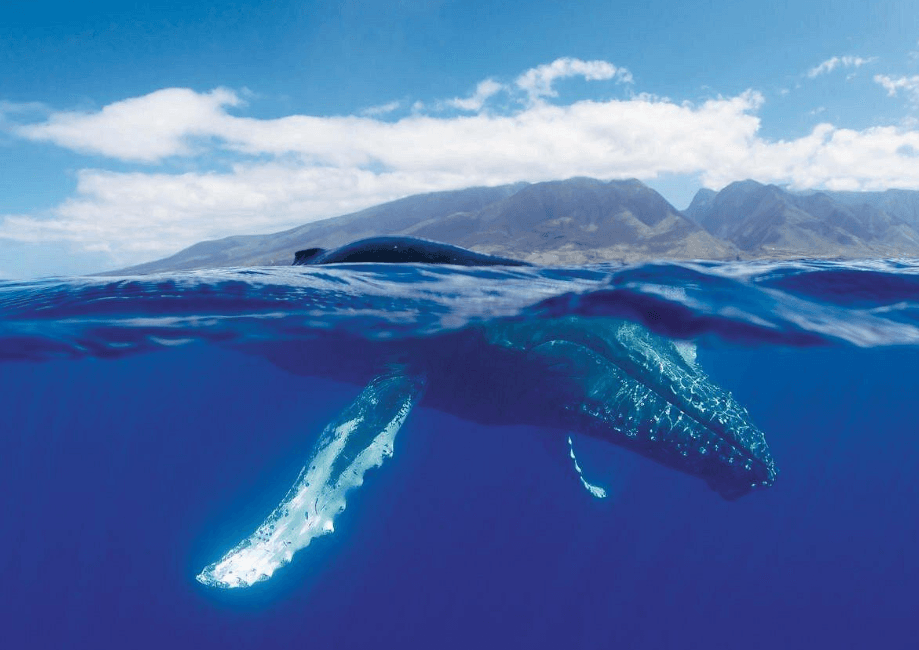
During a whale-watching trip in Samaná Bay, Dominican Republic, visitors may see a humpback whale approach the surface with its body noticeably tilted. Instead of appearing almost horizontal, the whale may rise at a steep angle, bringing its head or front portion into view before more of its back becomes visible.
This movement can look dramatic from a boat, particularly when the whale emerges close to the surface in a short sequence of movements.
But why does a humpback whale sometimes surface at such an angle?
The answer depends on the animal’s movement immediately before surfacing and what happens afterward. A steep angle may reflect the whale’s underwater trajectory, a change in direction, or the way its body is positioned as it approaches the air. The angle alone does not reveal the whale’s exact intention.
For visitors interested in Samaná whale watching, understanding this movement can make an encounter more informative. It also helps distinguish an observable physical action from an explanation that would require more evidence.
What Does It Mean When a Whale Surfaces at a Steep Angle?
Humpback whales do not always approach the surface with their bodies aligned horizontally. Their orientation can change as they move underwater, and an observer may see the front or another part of the body rise at a pronounced angle.
A steep surfacing angle describes the whale’s visible orientation as it approaches or breaks through the surface. It is a description of body position, not a formal explanation of behavior.
The appearance can vary. Sometimes, the head or front portion becomes visible first. In other cases, the curvature of the back reveals that the animal is rising diagonally through the water.
It is important not to confuse every angled surfacing with a specialized behavior. A whale may simply be following an underwater path that brings it toward the surface at that angle.
Why Might a Humpback Whale Surface at a Steep Angle?
Several explanations may be relevant, depending on the circumstances. None should be treated as a guaranteed explanation for every sighting.
1. Following an Upward Swimming Path
One straightforward possibility is that the whale is moving upward through the water before surfacing.
If its underwater trajectory is relatively steep, its body may approach the surface at a pronounced angle. The angle visible to people in a boat can therefore reflect the direction in which the whale was already traveling.
Observers rarely see the complete underwater approach, so they may witness only the final moments of this movement.
A steep angle does not necessarily mean the whale is rushing, struggling, or performing a deliberate display. It may simply be the visible result of its path toward the surface.
2. Changing Direction Beneath the Water
Whales can change their direction of travel before they become visible. When a humpback turns or adjusts its orientation underwater, it may approach the surface at a different angle from the one an observer expects.
For example, a whale that was swimming along a relatively level path may alter its course before surfacing. From the boat, the final movement may appear much steeper than the earlier part of its journey.
However, without seeing the entire sequence, an observer cannot reliably determine whether a turn caused the angle. It is better to record the visible body position than to assume the exact underwater movement that preceded it.
3. Adjusting Body Position Near the Surface
A whale’s body orientation can change during the transition from underwater movement to surface activity.
The angle at which the animal emerges may reflect its position immediately before breaking through the water. Even small changes in orientation can alter which parts of its body become visible first.
This is especially noticeable when only the head, back, or another limited section is above the waterline.
The resulting appearance may seem intentional to a human observer, but the visible angle alone does not show whether the whale was carrying out a particular maneuver.
4. Approaching the Surface Along a Curved Path
A whale’s route does not have to be perfectly straight. It may follow a curved path as it moves upward or changes direction.
If the animal’s trajectory curves near the surface, the body may appear to rise at a steep angle during the final portion of the movement. The angle may also change as more of the whale becomes visible.
A brief observation captures only one part of this path. Watching the sequence from beginning to end, when possible, provides more context than judging the whale’s position from a single instant.
5. Performing Another Activity Before Surfacing
A steep surfacing angle may occur within a broader sequence of movement. For example, the whale might be changing direction, moving relative to another whale, or transitioning between underwater and surface activity.
However, the angle itself does not identify which activity is taking place. The presence of another whale or the timing of the surfacing may provide context, but neither automatically proves the animal’s intention.
A careful observer records the angle alongside other visible details rather than using the angle as the sole basis for a behavioral explanation.
Is a Steep Surfacing Angle a Sign of Breaching?
No. A steep approach to the surface is not the same as breaching.
During a breach, a whale propels a substantial portion of its body out of the water. A steep surfacing angle can occur without the animal launching itself into the air.
The two movements may both look dramatic, but they describe different physical actions. A whale rising diagonally through the water may simply continue swimming once it reaches the surface.
It is therefore important not to label every steep or forceful-looking surfacing as a breach. Describing the actual movement helps keep photographs, captions, and wildlife observations accurate.
Does a Steep Angle Mean the Whale Is About to Dive?
Not necessarily. The angle at which a whale approaches or emerges from the surface does not, by itself, establish what it will do next.
After surfacing, a humpback whale might continue moving along the surface, change direction, or submerge again. The next action depends on the broader sequence of movement, and it cannot be predicted reliably from body angle alone.
A steep upward approach should also be distinguished from a downward-oriented body position associated with submerging. These are different parts of the animal’s movement, even if a short sighting makes the sequence difficult to follow.
For whale watchers, the most useful approach is to observe what happens next rather than assume that a particular angle signals a specific action.
Why Does the Whale’s Angle Look Different From a Boat?
The position of a whale relative to the observer can strongly influence how steep its body appears.
Viewing angle: A whale approaching the observer may look different from one moving across the field of view. Perspective can make the same physical movement appear more or less pronounced.
Waves: The waterline may conceal part of the whale’s body, leaving only the head or curved back visible. This can exaggerate the apparent angle.
Distance: When the whale is far away, it may be difficult to distinguish its body orientation precisely.
Changing light: Reflections and glare can obscure the boundary between the whale and the water.
Limited visibility: Observers usually cannot see the full underwater approach, so they must interpret the movement from a partial view.
These limitations do not make the observation meaningless. They simply explain why two people watching from different positions may describe the same surfacing differently.
How to Observe a Steep Surfacing Movement in Samaná Bay
Visitors can learn a great deal by watching how a whale approaches and leaves the surface.
Watch which part of the body appears first
Notice whether the head, front portion, or curved back becomes visible first. These details help describe the movement without assuming a cause.
Follow the sequence
If conditions allow, watch the whale before, during, and after the surfacing. The earlier movement may provide context, while the later movement shows whether the animal continues swimming or changes its course.
Pay attention to direction
Observe whether the whale is approaching, moving across, or moving away from the boat. Perspective can influence how steep the angle appears.
Avoid interpreting the angle as a signal
A steep approach does not automatically mean the whale is playing, communicating, displaying distress, or reacting to people. Those interpretations require evidence beyond the body angle.
Respect the whale’s space
Follow the guide’s instructions and applicable wildlife-viewing rules. Do not ask the boat operator to pursue or crowd a whale to obtain a closer view of its surfacing movement.
Responsible whale watching allows visitors to observe natural behavior without pressuring the animal to remain near the vessel.
Photography Tips for Capturing a Steep Surfacing Angle
A steep surfacing movement can make an interesting photograph because the whale’s body may appear in an unusual orientation.
Keep some space around the animal. A wider composition can show the whale’s position relative to the waterline and make the angle easier to understand.
Capture more than one frame. A short sequence may reveal how the body’s orientation changes as the whale approaches the surface.
Consider the viewing perspective. A photograph taken from one side may make the angle look different from an image taken from another position.
Avoid misleading captions. Describe the visible movement, such as “humpback whale rising toward the surface at an angle,” rather than claiming that the whale is about to breach or perform another action.
Follow onboard safety instructions. Keep photography equipment secure and do not interfere with the guide or boat operator.
A photograph can document body position, but it cannot automatically reveal the cause of the movement.
What Can Researchers Learn From Surfacing Angles?
Researchers studying whale behavior may record body orientation, surfacing sequences, movement direction, and other visible actions. Video can help document how a whale’s position changes over time.
When researchers have suitable measurements and observation methods, they may be able to describe movement patterns more precisely than a casual observer can. However, the angle visible in a single photograph is not enough to reconstruct the entire underwater path or determine the whale’s intention.
A useful distinction is the difference between measuring an observable feature and explaining why it occurred. Body angle can be documented; its behavioral meaning may require additional observations and evidence.
This approach helps prevent a dramatic-looking movement from being given an unsupported scientific explanation.
Frequently Asked Questions
Why do humpback whales sometimes rise at a steep angle?
They may be following an upward path, changing direction, or adjusting their body orientation near the surface. The exact reason cannot usually be determined from the angle alone.
Does a steep surfacing angle mean a whale is breaching?
No. Breaching involves propelling a substantial part of the body out of the water. A steep surfacing movement can occur without a launch into the air.
Can a whale surface steeply when it is changing direction?
Yes, a change in direction is one possible explanation. However, observers cannot assume that a turn occurred unless the surrounding movement provides supporting evidence.
Is a steep surfacing angle a sign of distress?
Not by itself. Body angle alone is insufficient to assess the whale’s condition or welfare.
Can visitors see this behavior during Samaná whale watching?
It is possible to observe different surfacing angles during a trip, but no particular movement is guaranteed. Sightings depend on the whales’ natural behavior, visibility, sea conditions, and viewing opportunities.
How should I describe a steeply surfacing whale in a photograph?
Describe the visible body position and movement. For example, “A humpback whale rises toward the surface at a steep angle” avoids claiming an unconfirmed reason for the action.
What should I watch for after the whale surfaces?
Notice whether it continues swimming, changes direction, remains visible, or submerges. These details add context, but they do not guarantee what the whale will do next.
Conclusion: Look Beyond the Angle
A humpback w

Local explorer & expert guide in Montana Redonda.