How Do Scientists Determine Whether Humpback Whales Return to Samaná Bay in Different Years?
Every year, humpback whales travel through the North Atlantic as part of their seasonal movements. The waters around Samaná in the Dominican Republic are an important destination for observing these whales during the breeding season. But when researchers see a whale in the bay, how can they determine whether that same individual visited in a previous year?
Answering this question requires long-term monitoring. Scientists collect photographs, maintain individual identification records, compare sightings across breeding seasons, and evaluate how confidently they can recognize a returning whale.
These records help researchers distinguish repeated visits by known individuals from the broader seasonal arrival of humpback whales. They also reveal an important limitation: failing to see a whale in one year does not prove that it did not visit.
Understanding how scientists investigate returning whales helps explain why long-term research is valuable for Samaná Bay and humpback whale conservation.
Why Do Scientists Study Returning Humpback Whales?
A single whale sighting provides information about an animal at a particular time and place. Observations collected over several years can reveal much more about its use of a seasonal habitat.
Researchers may want to know whether individual whales are recorded in the same breeding region repeatedly, whether some individuals appear in multiple years, and whether the timing of their sightings changes.
These questions are relevant because migration involves more than traveling between two distant locations. Whales may use different areas during different stages of their annual cycle, and individual movement patterns can vary.
Long-term research can help scientists investigate:
- Whether known individuals are documented in Samaná in more than one breeding season.
- How often identified whales reappear in the available records.
- Whether the timing of sightings differs between years.
- Whether individuals documented in Samaná are also recorded at other research locations.
- How consistent monitoring contributes to understanding population movements.
These questions require observations spanning multiple seasons rather than a collection of sightings from just one year.
How Scientists Recognize a Returning Whale
Photo-identification
One of the main tools for recognizing individual humpback whales is photo-identification.
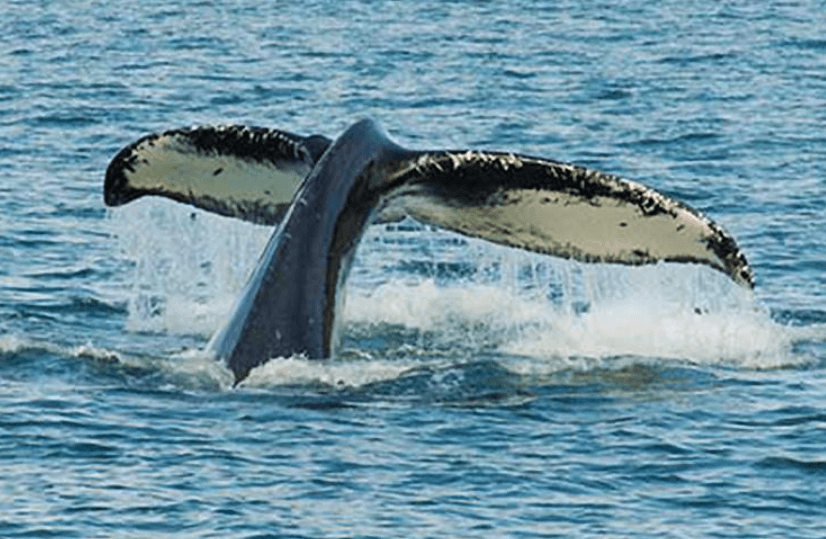
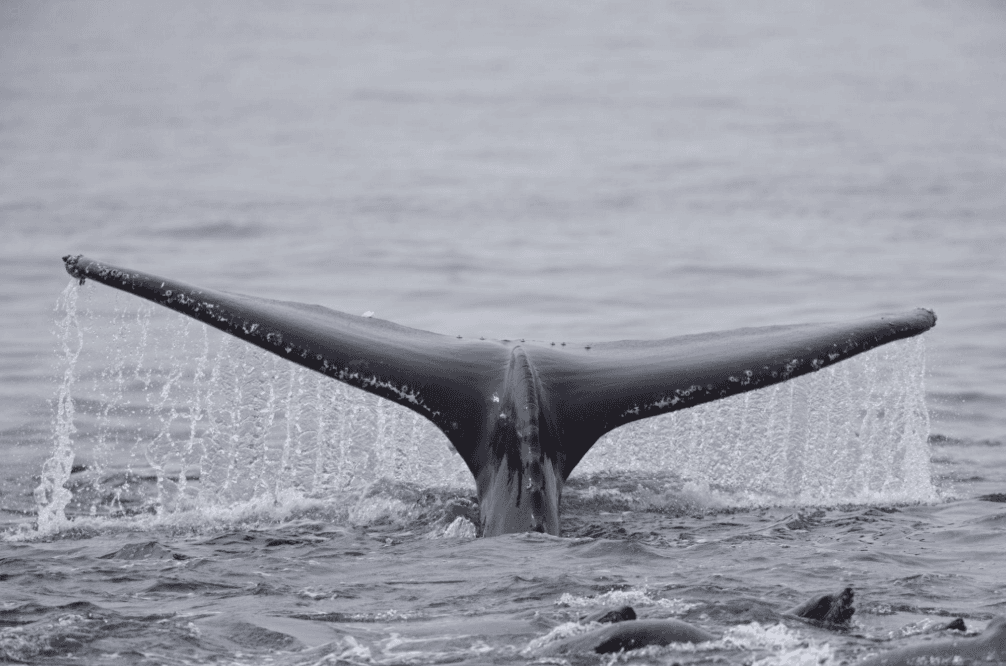
Researchers often photograph the underside of a whale's tail fluke, which may display a distinctive combination of pigmentation patterns, scars, and edge markings. These features can be compared with photographs collected during earlier surveys.
When a new image matches an existing record with sufficient confidence, researchers can associate the new sighting with a previously documented individual.
The process requires careful comparison. Different whales can have broadly similar markings, and image quality can vary. A photograph taken at an unusual angle may also make a familiar pattern look different.
Researchers therefore assess the combination of visible features rather than relying on general color alone. If the evidence is insufficient, the whale may remain unidentified.
Other identifying features
Tail-fluke photographs are particularly useful, but they are not the only possible source of identifying information. Depending on image quality and the research method, scientists may also examine scars, dorsal-fin features, and other recognizable characteristics.
Using multiple observations can strengthen an identification when the evidence is consistent. However, every feature must be interpreted carefully, especially if the animal's appearance has changed between years.
Maintaining an identification catalog
A long-term research project may maintain a catalog containing photographs and sighting histories for identified whales. Each record can include observation dates, locations, identification confidence, and other information relevant to the project.
When new photographs are collected during a later breeding season, researchers compare them with this catalog.
Over time, the catalog becomes a record of which individuals have been documented, when they were observed, and where sightings occurred. Its usefulness depends on consistent methods, accurate records, and careful review of proposed matches.
How Researchers Compare Sightings Across Years
Comparing observations from different years involves more than checking whether two photographs look similar. Researchers must establish a reliable connection between the images and interpret the resulting record in context.
Step 1: Collect observations over successive seasons
Researchers gather photographs and sighting information during multiple breeding seasons. Ideally, observations follow consistent procedures so that records can be compared meaningfully.
The dates, locations, and circumstances of each sighting should be documented. Researchers also benefit from preserving the original images and recording any uncertainty about the identification.
Step 2: Search for a previous record
When an identified whale is photographed in a new season, researchers search the existing catalog for a possible match.
They compare the new photograph with earlier images, paying attention to distinctive markings and differences that may reflect image quality or changes in appearance.
If the evidence supports a reliable match, the new sighting can be added to the individual's history.
Step 3: Confirm the identification
A proposed match should meet the research project's identification standards. Depending on the images and methods available, this may involve expert review or independent confirmation.
A match should not be accepted simply because the whale was seen in the same location at approximately the same time of year. Many whales may visit the same breeding region, so location alone is not sufficient to establish identity.
Step 4: Record the return
Once the identification is accepted, researchers can record that the whale was documented in more than one breeding season.
For example, a hypothetical whale might be identified in February 2025 and matched to a photograph collected in March 2027. This would establish documented presence in both years, but it would not reveal every place the whale visited during the intervening period.
Researchers should distinguish confirmed sightings from assumptions about what happened between them.
Step 5: Compare many individuals
A single returning whale can provide an interesting observation. A large, consistently maintained catalog allows scientists to examine patterns across many identified animals.
Researchers may compare the number of individuals documented in multiple years, the intervals between sightings, and the distribution of records across the study period.
Such analyses can reveal patterns in the available data, although their interpretation depends on how thoroughly the area was surveyed in each year.
Does a Missing Sighting Mean a Whale Did Not Return?
No. This is one of the most important limitations of long-term whale monitoring.
A whale may visit Samaná during a breeding season without being photographed or recognized. It could be present when survey effort is limited, remain outside the areas being monitored, or be seen under conditions that do not allow reliable identification.
As a result, researchers must distinguish between a whale that was not documented and a whale that was confirmed not to be present. The latter is usually much harder to establish.
Consider a hypothetical individual photographed in 2024 and again in 2026, with no confirmed identification in 2025. The records establish that the whale was documented in 2024 and 2026. They do not establish that it skipped Samaná in 2025.
It may have visited without being detected, used a different part of the region, or spent that season elsewhere. The available records alone may not distinguish these possibilities.
This is why scientists interpret missing sightings cautiously rather than automatically treating them as evidence of absence.
How Observation Effort Changes the Results
The chance of recognizing returning whales depends partly on how researchers collect their data.
A season with frequent surveys and good photographic conditions may produce many identifiable sightings. A season with fewer surveys, rougher seas, or limited coverage may yield fewer records even if the whales' presence has not changed substantially.
This creates a challenge when comparing one year with another.
Researchers may document survey dates, the areas covered, observation duration, sea conditions, and the number of photographs suitable for identification. These details help them evaluate whether differences in the records could reflect differences in monitoring effort.
Statistical approaches can also help account for imperfect detection when the study design and data support such analysis.
Without considering detection, researchers could mistakenly conclude that fewer whales returned in a particular year simply because fewer animals were observed.
Can Scientists Calculate the Return Rate?
Researchers can calculate measures of reappearance from identified-whale records, but the exact meaning of the result matters.
For example, a study might calculate the proportion of previously identified whales that are documented again in a later season. This is a measure of observed reappearance within the available dataset.
It is not automatically the percentage of whales that physically returned to Samaná. Some individuals may have visited without being detected, while others may have been observed outside the study area.
The result also depends on how researchers define the starting group, the time interval, and the observation period.
A reliable analysis should explain which whales were included, how an individual was considered to have returned, and what limitations affect the estimate.
Most importantly, a return rate from one research project should not be presented as a universal characteristic of every humpback whale population.
What Can Long-Term Records Reveal About Migration?
Repeated sightings can help researchers investigate connections between breeding areas and other parts of a whale's range.
When individual whales are identified in multiple locations, their records may provide evidence of movement between those locations. Collaborations between research programs can make these comparisons more useful when photographs, identification standards, and recordkeeping methods are compatible.
For example, a whale photographed in a breeding area may later be matched to a photograph from another documented location. Such a match can provide evidence that the individual used both areas at different times.
However, two observations do not reveal the complete route taken between them. Researchers need additional data to establish more detailed movement patterns.
The strength of the conclusion depends on the quality of the identification and the information available from each location.
Do Returning Whales Use Samaná for the Same Reason Every Year?
Researchers should not assume that a whale's return means its behavior or circumstances are identical each year.
The wider breeding region is used by humpback whales for a range of activities associated with reproduction and social behavior. Individual whales may differ in their movements, timing, and interactions.
A sighting in multiple seasons demonstrates repeated documented presence, provided the identification is reliable. It does not, by itself, explain why the whale returned or what it was doing during each visit.
To investigate those questions, researchers may combine photo-identification with behavioral observations, information about age or reproductive status when reliably known, and other ecological data.
This distinction prevents scientists from drawing conclusions about an individual's motivation from a photograph alone.
How Do Researchers Use Multi-Year Data for Conservation?
Long-term records can help scientists understand which locations are used repeatedly and how the presence of identified whales changes across seasons.
These findings may contribute to the assessment of important marine habitats, the planning of monitoring programs, and discussions about reducing potential disturbances to whales.
Consistent records can also help researchers identify gaps in their knowledge. For example, if certain periods or locations have few observations, additional monitoring may improve understanding of how whales use the wider region.
However, photo-identification records should be interpreted alongside other evidence. They do not independently provide a complete estimate of population size, migration routes, or conservation status.
Effective conservation planning benefits from combining reliable long-term observations with information about habitat conditions, vessel activity, whale behavior, and other relevant factors.
What This Means for Visitors to Samaná
For visitors, every whale-watching trip offers a snapshot of the animals present at that moment. A whale seen during one season may have visited the region before, but an observer cannot reliably establish that history from appearance alone without suitable identification records.
Clear photographs of tail flukes may be useful to research projects that accept public observations. If submitting photographs, visitors should follow the receiving organization's instructions and provide accurate dates and locations.
Responsible whale watching remains important. Visitors should follow the crew's guidance and applicable local rules, and they should not pressure a boat operator to approach a whale more closely for a better photograph.
Long-term research depends on reliable observations and responsible practices, not on obtaining images at the expense of the animals.
Frequently Asked Questions
Do humpback whales return to Samaná Bay every year?
Samaná is a recognized seasonal destination for North Atlantic humpback whales, but that does not mean every individual returns every year. Whether a particular whale has been documented in multiple seasons depends on reliable identification records.
How can scientists recognize the same whale after several years?
Researchers compare photographs of distinctive features, particularly tail-fluke patterns, and check them against existing identification catalogs. A match must meet the project's standards for reliable identification.
If a whale is not seen one year, does that mean it went somewhere else?
Not necessarily. The whale may have visited without being detected or may have been outside the monitored area. Missing records alone cannot establish where the animal spent that season.
Can researchers estimate how often whales return?
They can estimate observed reappearance using multi-year sighting records. To interpret this as a measure of actual return behavior, researchers must account for the possibility that whales were present but not detected.
Can photographs reveal a whale's full migration route?
Photographs from different locations can establish that an identified whale was documented in those places. They generally do not reveal the exact route or all movements between sightings.
Why are long-term whale records important?
They help scientists investigate repeated habitat use, individual movements, seasonal patterns, and changes in documented presence over time. Their value increases when records are collected consistently and identification uncertainty is handled carefully.
Conclusion
Scientists investigate whether humpback whales return to Samaná Bay by comparing reliable individual identification records across different breeding seasons. Photo-identification catalogs, repeated observations, and careful data analysis help establish which whales have been documented more than once.
Yet the absence of a sighting does not prove that a whale was absent, and a confirmed return does not reveal every movement made between seasons. Observation effort, identification confidence, and the limits of the available records must all be considered.
By maintaining consistent long-term records, researchers can build a more accurate understanding of how humpback whales use Samaná and the wider North Atlantic breeding region. This work adds scientific depth to the seasonal whale-watching experience while supporting more informed approaches to marine conservation.

Local explorer & expert guide in Montana Redonda.